
Categories
Ebony Queen Martin Legacy Investments Martin Legacy Investments Queendom Entertainment

The Business of Survival: When Did Living Become a Luxury?

An editorial on economic survival, human dignity, and the freedom to simply exist.

What if I just wanted to exist?

We are born into a world where the land already exists. The oceans already exist. The trees produce fruit. The sun provides warmth. Nature operates through extraordinarily complex systems without ever issuing an invoice. Yet human existence has become deeply intertwined with earning, purchasing, and producing. When did humanity lose the plot and turn living into surviving? The most obvious answer might seem to be capitalism, but the deeper question concerns our autonomy. Generations before us inherited and maintained economic systems they believed would provide sustainable ways of living. Yet the conditions under which millions of people now struggle to survive raise a question worth examining: Who taught us that simply existing is something we have to earn?

Don’t get me wrong. Life requires labor. Whether through food production, environmental protection, healthcare, or technological advancement, human effort is essential to sustaining civilization. I’m not arguing that labor is unnecessary, that resources should be unlimited, or that society could function without economic organization. I’m questioning whether an economy designed to sustain human civilization has instead made economic productivity one of the dominant measures of human worth.

The Economics of Survival

While major corporations generate enormous revenues and executive compensation continues to climb, millions of working Americans struggle to afford basic necessities. According to the Economic Policy Institute, inflation-adjusted compensation for CEOs at the largest U.S. firms increased approximately 1,316% between 1978 and 2025, compared with just 28% for typical workers (Gould & Bivens, 2026). Meanwhile, the National Low Income Housing Coalition estimates that a full-time worker must earn $29.19 per hour to afford a modest one-bedroom rental at the national fair-market rent without spending more than 30% of their income on housing. The average renter earns just $24.84 per hour (National Low Income Housing Coalition, 2026). These figures reveal a troubling contradiction between the wealth generated within our economy and the financial security available to many of the people sustaining it.

Housing is only one part of the equation. Food, transportation, healthcare, and childcare all compete for household income. For working parents, childcare can become an expense comparable to housing itself. The Federal Reserve reported that most families paying for both childcare and housing in 2025 spent at least half as much on childcare as they did on housing (Board of Governors of the Federal Reserve System, 2026). Meanwhile, healthcare costs have become so burdensome that even some medical professionals are reconsidering their own insurance coverage. In September 2026, KFF Health News reported on a physician and pharmacist who opted to forgo health insurance for their family after their monthly premiums approached $1,600 (Norimine, 2026). Although most medical professionals remain insured, the fact that a family providing healthcare professionally could find coverage financially unreasonable illustrates how deeply affordability concerns extend into American society.

These are not extravagant purchases or unnecessary luxuries. They are fundamental components of maintaining a household and participating in society. Yet for many Americans, affording them leaves little room for savings, recreation, or long-term planning. We’ve created an economic environment in which obtaining the necessities of life can consume so much of our income that enjoying the life we’re working to maintain becomes a secondary consideration.

For decades, Americans have been encouraged to believe that hard work, education, financial discipline, and professional advancement provide a dependable path toward success. Yet pursuing that path can also mean accumulating student debt, financing increasingly expensive vehicles, and paying rent while struggling to save enough to purchase a home. Education can improve earning potential, but it does not guarantee financial independence. Employment can provide stability, but it does not guarantee security. The traditional formula for success has become considerably more complicated than simply working hard and making responsible decisions.

Consider someone working two jobs to maintain a household. Losing either source of income could threaten the stability that person spent years building. According to the Federal Reserve’s 2025 household survey, 16% of American adults reported not paying all their bills in full during the previous month (Board of Governors of the Federal Reserve System, 2026). This isn’t merely a hypothetical concern about how people might respond to an unexpected emergency. For millions of Americans, financial instability is already part of their monthly reality. That vulnerability raises a question: Why does maintaining stability require nearly as much effort as achieving it?

Food production, infrastructure, healthcare, and essential services will always require human labor and investment. But human ingenuity has also produced extraordinary advancements in automation, communication, and efficiency. If technological progress allows society to accomplish more with fewer resources, why hasn’t that progress consistently translated into greater freedom for the people doing the work?

The Rat Race Disguised as Achievement

We’ve been conditioned to pursue education, employment, promotions, and professional advancement as milestones of success. We accumulate qualifications to access opportunities that may otherwise remain unavailable. As we advance, we’re often expected to accept greater responsibilities in exchange for higher compensation. Yet increased earnings don’t necessarily eliminate financial pressure, particularly when housing costs, debt, and other obligations continue to consume household income. Reaching one milestone frequently introduces another expectation rather than a meaningful opportunity to enjoy what we’ve accomplished.

Somewhere along the way, our sense of value became closely associated with occupation, income, professional status, education, and possessions. We celebrate financial success while frequently treating unemployment, poverty, and economic dependence as reflections of personal inadequacy. But does a person’s humanity become less valuable when they’re unemployed, retired, disabled, providing unpaid care, or choosing a lifestyle that produces less economic output? When did our worth become so closely connected to participation in a financial system that humanity itself predates?

Job insecurity, excessive workloads, underemployment, and poor work-life balance are not merely professional inconveniences. They can affect physical health, emotional well-being, relationships, and the ability to enjoy life outside employment. The World Health Organization and International Labour Organization estimated that working 55 hours or more per week contributed to approximately 745,000 deaths worldwide from stroke and ischemic heart disease in 2016 (World Health Organization & International Labour Organization, 2021). The pursuit of economic progress becomes difficult to celebrate when the conditions under which that progress is achieved can compromise the well-being of the people responsible for it.

When Pleasure Becomes a Privilege

Even leisure has become deeply intertwined with consumption. Recreation, travel, entertainment, and social experiences are frequently marketed as things we must purchase. Many workers spend much of their waking lives earning money, only to spend portions of that income purchasing temporary experiences of freedom during the limited time they have away from work. Rest becomes something scheduled around productivity rather than an ordinary part of human existence.

I wonder what this constant pressure has done to our collective sense of whimsy. How often do we pursue hobbies without considering whether they could generate revenue? How often do we allow ourselves to read for pleasure, explore nature, create art, fall in love, rest, or satisfy our curiosity without expecting something measurable in return? Even creativity can become entangled with branding, monetization, and marketability. We’re encouraged to turn our personalities into personal brands, our hobbies into side hustles, and our interests into opportunities for financial advancement. But a meaningful life must have room for experiences that are valuable precisely because they don’t need to accomplish anything.

What Would an Economy Designed for Living Look Like?

In an advanced society, labor would still be necessary. However, human dignity would not depend upon a person’s ability to toil. Economic progress should not be evaluated exclusively through production, profitability, and growth. Security, leisure, health, environmental sustainability, and quality of life should also influence how we define success. What good is a thriving economy if the people sustaining it cannot consistently enjoy the benefits of their contributions?

A society that prioritizes human well-being might invest more heavily in affordable housing, accessible healthcare, paid leave, stronger worker protections, and a more equitable distribution of productivity gains. It might also reconsider how businesses measure the success of technological advancement. Rather than evaluating innovation primarily through its potential to reduce payroll expenses, organizations could examine whether technology improves working conditions, strengthens public services, or solves problems that human labor alone has struggled to address.

Artificial intelligence makes this question especially relevant. As businesses explore replacing administrative, customer service, and other routine functions with automated systems, the conversation frequently centers on operational efficiency and reduced labor costs.But efficiency for whom? When a company reduces the number of employees required to complete a task, the resulting savings can benefit shareholders and executives without necessarily improving the lives of displaced workers. Technological progress does not inherently require that outcome. Businesses could use a portion of the gains to retrain employees, shorten working hours, improve wages, or transition workers into responsibilities that require greater human judgment, creativity, and interpersonal understanding.

Consider what technological innovation could accomplish if improving human life were treated as a primary objective. Autonomous systems could assist with removing pollution from waterways, monitoring environmental hazards, or performing dangerous industrial cleanup. Healthcare technology could help medical professionals detect diseases earlier, reduce administrative burdens, and expand access to services in underserved communities. Automation could reduce repetitive physical labor in occupations where workers face significant injury risks. These applications would still require investment, maintenance, oversight, and skilled workers. The difference would be the priorities guiding their development.

This isn’t an argument against automating administrative work. Repetitive office tasks can be exhausting, and eliminating unnecessary work can be beneficial. The problem arises when society celebrates the reduction of human labor without giving equal consideration to what happens to the humans whose labor is no longer required. If technology allows us to produce more while working less, shouldn’t at least some of that progress be reflected in greater economic security and personal freedom?

Critics might reasonably ask: If people didn’t have to work so hard to survive, who would perform the work society requires? That question deserves serious consideration. Essential services still need workers, businesses need resources, and economic systems must address incentives, funding, labor shortages, and fairness. Reducing financial insecurity would not eliminate these challenges. Nor would every industry be able to shorten working hours or increase compensation without facing difficult trade-offs.

However, the goal isn’t necessarily to eliminate work. It’s to reconsider the conditions under which people work and the extent to which survival should depend on enduring economic insecurity. A society with greater financial stability could still reward skill, effort, innovation, and professional achievement. It could also recognize that unpaid caregiving, community involvement, artistic expression, and other contributions have social value even when they don’t produce conventional wages or corporate profits.

What would business look like if success were measured not only by the accumulation of wealth but also by the needs it fulfilled without unnecessarily exhausting the people involved? Employment could still provide financial incentives, professional development, and personal fulfillment. Businesses could still innovate and compete. But the pursuit of profit would not have to be treated as more important than every other measure of social progress.

Even our relationship with the environment could benefit from reconsidering these priorities. Commuting, resource-intensive production, excessive consumption, and inefficient infrastructure all have environmental consequences. Although reducing working hours or expanding remote work would not automatically eliminate those impacts, economic planning that considers both environmental sustainability and human well-being could create opportunities to reduce unnecessary resource consumption.

The objective would be to create an economy in which human beings have greater opportunities to contribute meaningfully without sacrificing their health, relationships, or sense of self. Work should be one component of a meaningful life, not the condition upon which every other component depends.

The Freedom to Simply Exist

Humanity has achieved extraordinary technological and economic advancement, yet millions of people still experience daily life as a continuous struggle to secure basic necessities. Can a society truly distinguish itself as successful when so many people lack the time, stability, and freedom to enjoy what they work so hard to maintain?

Perhaps the greatest measure of human progress should not be how much we can produce, how quickly we can innovate, or how much wealth we can accumulate. Perhaps it should be how successfully we’ve created a civilization in which people have the security and freedom to experience what it actually means to be alive.

A society should not exist merely to sustain an economy. An economy should exist to sustain society.

We should have the freedom to live, love, explore, create, and simply exist.


References

Board of Governors of the Federal Reserve System. (2026). Report on the economic well-being of U.S. households in 2025. https://www.federalreserve.gov/publications/2026-economic-well-being-of-us-households-in-2025-executive-summary.htm

Gould, E., & Bivens, J. (2026, September 17). CEO pay surged in 2025: CEOs are paid 325 times as much as the typical worker. Economic Policy Institute. https://www.epi.org/blog/ceo-pay-surged-in-2025-ceos-are-paid-325-times-as-much-as-the-typical-worker/

National Low Income Housing Coalition. (2026). Out of reach 2026: The high cost of housing.https://nlihc.org/news/nlihc-releases-out-reach-2026-high-cost-housing

Norimine, H. (2026, September 22). As health insurance costs soar, healthcare workers also feel the pinch. KFF Health News. https://kffhealthnews.org/health-care-costs/uninsured-doctors-obamacare-affordable-care-act-aca-rising-premiums-idaho/

World Health Organization & International Labour Organization. (2021, May 17). Long working hours increasing deaths from heart disease and stroke: WHO, ILO. https://www.who.int/news/item/17-05-2021-long-working-hours-increasing-deaths-from-heart-disease-and-stroke-who-ilo
Categories
Ebony Queen Queendom Entertainment

Romanticizing Life Again ❤️‍🔥

This year, I’ve literally been fighting for my life on every front.

Over the years, I sacrificed my happiness for the happiness of others. I sacrificed my beauty for the comfort of stability. I sacrificed my mental health for the appeasement of others. After all that sacrificing, I found myself depleted and depressed this summer.

As someone who has suffered from depression before, I never thought I’d see myself in that position again because I knew how much it would take to pull myself out of that place if I ever got there again. But for me, depression surfaced when I was at my weakest and emotionally exhausted enough to feel like giving in.

My depression became particularly heavy toward the end of June.

After being laid off in February, I did everything I could to maintain my home without a secondary source of income. I quickly learned that losing that job had ricocheted me into instability, regardless of how much I had prepared.

And in the midst of losing so much this summer, I also had to learn that being a good person to other people doesn’t guarantee that they’ll be there when you need them.

For the last five years of my life, I sat on top of money that could have saved me this year. Instead, my heart wanted to take care of people. I wanted to be present, supportive, and dependable in the lives of people I loved—even when that meant depleting myself.

I took and paid for the flights required to make sure my daughter maintained relationships with people who, quite honestly, should have been coming to visit her. I spent my last making sure everyone else was comfortable.

But when I lost my secondary job, I was awakened to the reality that very few people were ever going to be present and active in my life in the way that I had been in theirs.

And now that I’m on the other side of that depression, I’m realizing just how much of my life has been a combination of me pouring into others with very little being poured back into me.

So as I enter this stage of my life where I’m not only having to rebuild what I built alone that was taken from me, I’m also having to rebuild myself.

Once upon a time, I was a woman who wouldn’t leave the house without my hair and nails done. I held myself to a certain standard. I wanted to be a good person on the inside while also being put together, beautiful, and glowing on the outside.

Somewhere along the way, I stopped giving that same woman the attention I gave everyone else.

This year showed me that you cannot continually take from yourself to make other people happy and expect to remain happy, joyful, and whole.

I also spent this year watching people who know my character bend the reality of what I was dealing with to fit their own perceptions. I watched people who had called me for help in their own times of need attempt to talk down to me when I became the one in need.

I sat back and stayed quiet while people ran with narratives they had created in their own heads—narratives that never really bothered me to begin with, but eventually had to be addressed because of how big they became.

And honestly, I think I needed to see all of it.

Because this year was the wake-up call I needed.

You will never be happy as long as you are living for the happiness of other people. People will never be satisfied with everything you do to maintain an image that makes them comfortable. There will always be something else to criticize, compare, or use to keep you in the position they are accustomed to seeing you occupy.

I’m not interested in living like that anymore.

So as I enter my 33rd birthday season, I’m calling this my Redemption Season.

Not because everything magically worked out.

Not because I didn’t lose anything.

Not because this year was easy.

But because despite facing potential eviction, potential repossession, isolation, depression, and all of the other things that contributed to the weight I carried this year, I made it to the other side.

It was me, and my matriarchs, who ultimately helped pull me through.

And this time, when I rebuild my life, I’m building it according to the vision I have for myself rather than the vision other people think is most fitting for me.

I have no desire to spend the rest of my life searching for some perfect husband who will somehow make my life complete. I have no desire to have any more children. My religious beliefs are no one else’s business but my own.

When I set boundaries, I expect them to be respected.

I’m no longer the Ebony who gives her last to make sure everyone else is safe.

I’m no longer the Ebony who sits quietly while people create narratives about who I am.

I’m no longer the Ebony who believes that doing what older people tell me is the path to happiness simply because they are older.

I’m no longer the Ebony who jumps up to make sure everyone else is happy the moment they tell me what they need.

I’m finally entering the stage of my life where my needs, my beliefs, my desires, and my vision for my life actually matter to me.

And nobody gets to change that.

For 32 years, I lived a life where almost everyone I loved came before me and my needs.

I’m sorry to anyone that disappoints.

But sitting in my house in isolation this year woke me up to something I don’t think I could have understood any other way:

At the end of my life, when I look back at everything I accomplished, it won’t matter whether I followed the path other people thought was right for me.

It won’t matter whether I made everyone comfortable.

It won’t matter whether I was the good daughter, the good mother, the good friend, the good partner, or the good woman everyone expected me to be.

Because eventually, it will just be me sitting there with the life I lived.

And I refuse to reach the end of it wondering if I ever actually lived it for myself.

So this is me choosing myself.

Not because I stopped loving other people.

But because I finally understand that I am one of the people I’m responsible for loving, too.

33. Redemption Season.

And this time, I’m romanticizing my own life.

Categories
Ebony Queen Martin Legacy Investments PanAfrican Liberation Coalition Queendom Entertainment

A Baldwin Summer 📚 #SummerReadingList

It’s A Baldwin Summer 📖

What are you reading this Summer? 🤓📚

#SummerReading #JamesBaldwin #NotesOfANativeSon #SummerReadingList #FreedomSummer

Categories
Uncategorized

AM Vibes – June 16th

Lately, I’ve been relying deeply on Youtube DJ’s for the vibes. I appreciate their ability to capture a mood and keep you encapsulated in that energy. So, I’ve decided to start a series highlighting Youtube DJ’s.

Today’s AM Vibes was her first DJ set on her own channel via Youtube, Mrs_Fallback

(https://www.instagram.com/mrs_fallback/) .

[ https://youtu.be/jk82t57V1SY?si=8BLGVTEr7t8ylFix ]

Categories
Ebony Queen Queendom Entertainment

Ramping Up

May was a whirlwind! In the midst of getting laid off due to AI, the close of the spring semester for my child and myself, and the weight of carrying my household on a single income I gained more clarity than I have in years. If you’ve been following my Awakening series, you know thats saying a lot! For years, I lost myself in the mundane life of being an employee… working to make ends meet but living with no inspiration. Putting my own business and entrepreneurial goals on the back burner just to merely have the energy needed to work & exist.

As the dust settles, a new life is afoot. One where I understand that the only lives I’m truly responsible for sustaining are my own and the ones I create. A life where self-care is a requirement, not an option. A life where money works for me, not against me. A life where I’m comfortable going out into the community instead of isolating out of comfortability in my room.

The clarity I found was that no matter how much you try and control things… No matter how perfect you try to walk the straight line, as soon as you step off it, the facade you’ve built your life on crumbles. When you strip away your titles, sell off your things, and are left sitting in a mess of your own making… are you strong enough to get back up and keep going? Or would you sit by idly as everything you worked for went down the drain in a heartbeat?

This year isn’t the first time that I’ve had to rebuild my life after a major loss and I’m sure it won’t be the last. But for the first time in forever, I’m clear about what I want and what I don’t want in my life. So with that being said, look out for a ramp up in my presence and content. It’s time I truly stopped playing with my potential.

Categories
Ebony Queen PanAfrican Liberation Coalition Queendom Entertainment

Procrastination Kills The Dream

For decades I’ve walked around with the dreams of a conglomerate floating around in my head . Just waiting…, waiting for alignment, waiting for advancement, waiting for a sign. Just waiting… Now here I am approaching my middle thirties with nothing to show for the dreams I mapped out so perfectly in my head but never executed. I know what people will say… dreams take time, you’re not behind, failures are redirections. The truth is though, that when I strip away the excuses, it’s procrastination, fear , and a little laziness that has kept me from really doing what I know I’m truly capable of.

Now, I’m not taking anything away from myself. I didn’t come up in an ultra-wealthy family that left an estate for me to grow up cushy on. But, I am the lineage of a man who defied all the odds of his time and did what he had to do to raise 8 children without complaint. A serviceman who gained a unique skillset and utilized that skill day in and day out to ensure his family always had what they needed. Coming from that, I always knew I was capable of anything… and the only thing that ever stopped me from achieving what I want was myself.

As time goes on and I gain wisdom, I’ve had an epiphany. It doesn’t really matter how perfectly you “do” life or how closely you follow the law of the land… life is about chance and alignment. You’ll never receive more than you allow yourself to be ready for. That’s why people who stay in dead end jobs, stay in them forever. They never seek anything more than the check that obliges their current needs. They never pursue the education required to achieve what they truly desire. & sadly, some just don’t believe they can do anything that’ll advance them beyond the bare minimum work that they are required to do to sustain their current lives.

It’s not something to be ashamed of… for African Americans like myself, it’s merely a feature of an unjust system. For hundreds of years, we’ve burned ourselves out being the best of the best in industries that built their riches on our expertise, but kept the compensation for themselves. We see it in the record contracts artists are coerced into signing at the inception of their careers. We see it in the athletes who sign their vitality away to decades old organizations before even beginning their second decade on Earth. We see it in the inventors and the scientists of history whose work was stolen and exploited. We see it, but we’ve taught ourselves that being a part of the system is better than the bloodshed and work that comes with creating a better one.

Much like in my own personal life, I find myself wondering how long we’ll wait. Will another generation go by where we haven’t grown beyond the economical and political circumstances that so deeply affect our lives on a daily? What does the future world look like for our children? Will they still have the bare minimum of free agency and opportunity that we have? We often forget just how close we are to the generations whose lives weren’t their own. In the “good ole days” and even now, slave labor props up the ultra wealthy. A system of underpayment, exploitation, and negligence boasts up multiple industries that pride themselves on morality.

Now that I’ve opened up my eyes to a different perspective in life (see my Awakening Era series), I’m realizing that community is and has always been where our strength lies and the solution to our deepest issues. Thus, why our society is so hellbent on keeping us all divided. In history, long before capitalism and Wall Street, people bartered and traded skills & goods without tender or conflict. The local egg farmer traded with the milkmaid and communities built trust with providers of the skills they desired directly. As capitalism progressed, we lost the true essence of that business relationship. Now, customers are just a number in a system, employees are just a cog in the machine, and the top executives are rapacious plutocrats loaded with riches. “The secret of freedom lies in educating people, whereas the secret of tyranny is in keeping them ignorant.” – Maximilien de Robespierre

In my own life, and in our society, the wake up call has passed. We know the systems of this society are not fruitful for anyone anymore. Personally, my adjustment starts with my career and trusting myself to do what I have to do to succeed. It means sticking to projects until the end, building community directly, and truly putting myself out there. Things I’ve struggled with in my human experience because of how protective I am of my essence. Ultimately though, our essence is our power. As much as we want to keep our essence locked away safely for ourselves, life really starts getting good when you stop being afraid of the world seeing you for who you truly are.

Categories
Ebony Queen PanAfrican Liberation Coalition Queendom Entertainment

The Final Frost, Part 1

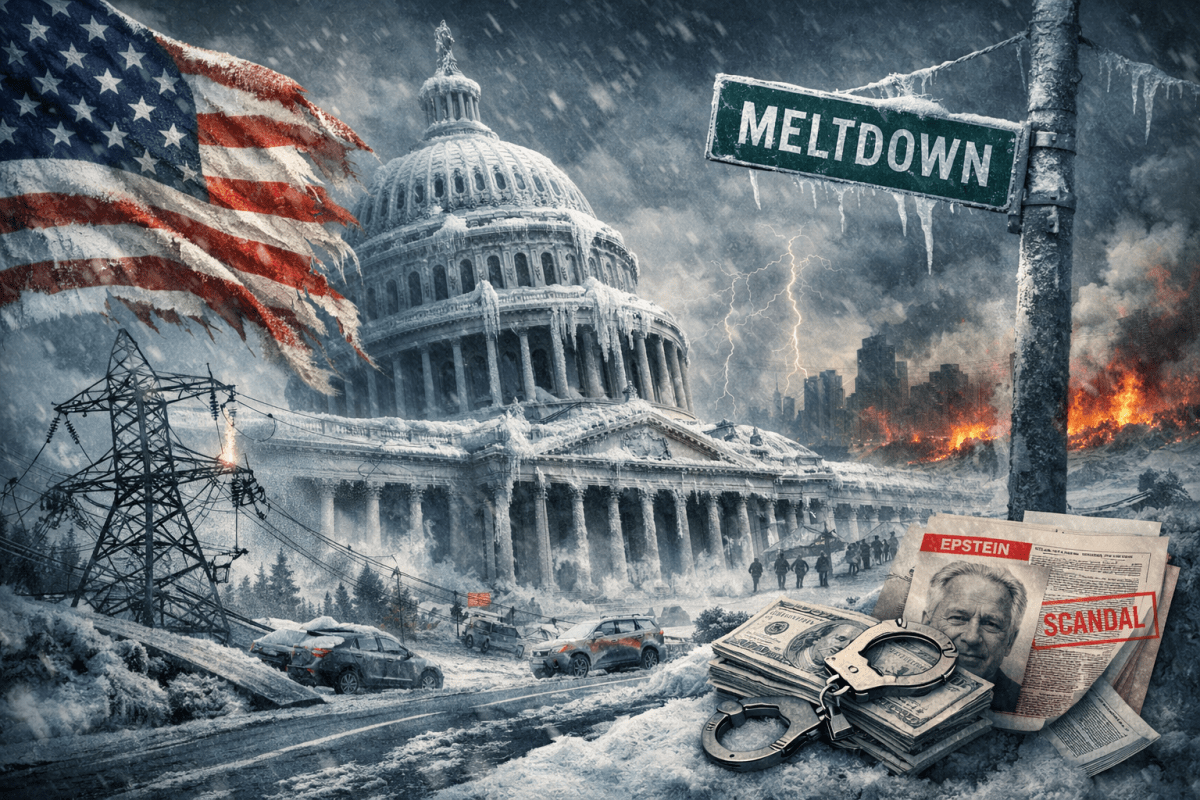
The last time it snowed in Tampa, it was 1977. Fast forward, January 2026, and the entire U.S. is under ice storm warning/ freezing weather watch. Although the time frame of the storms are aligned with normal Winter month behavior, this year things were different… It was unusually hot throughout the holidays everywhere. That all ended in January when this Arctic blast shook the nation, collapsing full power grids almost simultaneously as the government power structure in our society seemed to collapse.

Chronologically, this year has quite a few significant anniversaries that are more than befitting for the times. Coincidental, even. America will reach its 250th birthday this year. If you aren’t aware, there is a theory derived from John Glubb’s The Fate of Empires, which explores “analyzing history from Assyria to modern times, Glubb identified a common life cycle: Age of Pioneers, Conquest, Commerce, Affluence, Intellect, and Decadence. Decadence is characterized by economic inequality, materialism, and societal apathy.”

Based on Glubb’s theory, “America appears to have reached the age of decadence, which Glubb defines as marked by “defensiveness, pessimism, materialism, frivolity, an influx of foreigners, the welfare state, (and) a weakening of religion.” (Thomas, 2015) Per Roz Savage’s layout, these different ages span over a number of years each, with Decadence being one of the final ages;

  • The Age of Pioneers: expansion of territory
  • The Age of Conquests: more expansion, not always peaceably
  • The Age of Commerce: wealth is created through trade and innovation
  • The Age of Affluence: all appears to be well, but the seeds of destruction are being sown
  • The Age of Intellect: the acquired affluence enables people to pursue the life of the mind. Academic institutions may produce sceptical intellectuals who start to question the dominant narratives of the empire, undermining its authority
  • The Age of Decadence: people indulge in excessive consumption in the pursuit of happiness, while in actuality becoming less happy. The civilisation creates diversions for the populace, from gladiator fights to Facebook and Instagram, while people indulge in addiction and debauchery. The values and discipline that enabled the creation of the empire are eroded
  • The Age of Decline and Collapse: inequality grows, increasing numbers are excluded from meaningful work and the means to fulfil their potential. Discontent leads to disruption and the empire collapses.

(Savage, 2019)

Furthermore, in coincidental alignments, February 2026 is the 100th anniversary of the federally recognized celebration of Black History Month. In the 1920’s, the prominent Dr. Carter G Woodson created Negro History Week and architected the annual celebration of Black American accomplishments known as, Black History Month. “As the son of formerly enslaved parents, Dr. Woodson understood that denying people of their history denies them of their humanity. “Those who have no record of what their forebears have accomplished lose the inspiration which comes from the teaching of biography and history,” he wrote.” (Melville, 2026)

I could continue on for days with coincidentally aligned dates and times but these two are the most prominent and eerily befitting human events that are echoing their sentiments in this new year. Most Americans, for the first time in decades, are entering the territory of an authoritarian government which, most of us working age and below, have never had to deal with personally on an immediately direct level. The most powerful person in our government is a rouge decoy for all the ultra-rich, powerful people pulling the corruption strings behind the scenes. But for the first time in a very long time, people are fed up and more riled up than ever. Not just politically and financially, but socially and professionally. For years, every single person in America has felt the bubbling up or been directly impacted by a society that is rapidly declining.

January 2026’s Final Frost highlighted the immeasurable depth of corruption that is being inflicted on Americans and negatively impacting our every day lives. The ice storm exposed the weakness of our power sources from the root to the shoot. Power grids across the country failed due to overload. People reeled over the funds they lost preparing for a storm that wasn’t nearly as bad as was predicted. In defense of the meteorologists, we were warned that Trump’s gutting of NOAA & NWS would directly correlate to discrepancies in reporting. “The Trump administration’s 2026 budget appears to be actively working to eliminate the Office of Oceanic and Atmospheric Research (OAR) along with all NOAA weather laboratories and cooperative institutes and laboratories, which provide weather forecasting data and research from 80 universities and work to improve NOAA’s warning and forecast capabilities. Without continued funding, long-term datasets would be disrupted and the NWS’ ability to inform disaster preparation and provide accurate and timely weather tracking would be at risk. Moreover, the president just signed into law the “One Big Beautiful Bill Act,” which, among other dangerous provisions, repealed all unobligated funds that the Biden administration had designated for improving research, forecasting, monitoring, and public communication of hazardous weather.” (“Lasting Threat of Trump’s Cuts to NOAA and NWS on American Communities,” n.d.) 

While Americans faced the physical impacts of cutting crucial funding for weather reporting, Trump’s DOJ released over 3 million files on January 30th 2026 about the case surrounding notorious child sex offender, serial rapist, and human trafficker Jeffrey Epstein. This file drop cemented the publicly known notion that not only is the sitting president directly involved in the Epstein scandal, so is a large number of mostly prominent ultra-wealthy men whose crooked business dealings benefited off the backs of hardworking, law abiding citizens. Everyone from politicians to celebrities were exposed sending the western world into a frenzy. What now? How can a country where citizens are subjected to torturous policing, corrupted government officials, and invasive surveillance, suddenly be so lenient on the western world’s most powerful figures using money and connections to inflict world changing, immeasurable pain on a mass scale? How can a world that has normalized the rich eating the meek truly be sustainable? Truth is, it can’t and it won’t.

John Glubb told us, with evidence, in 1977 that America may have been on the brink of its collapse. “Glubb says the 250-year average of empires has not varied in 3,000 years, but we don’t learn from history because “our studies are brief and prejudiced.” He means they are mostly about one’s own country.” (Thomas, 2015) Although, it may not be 250 years to date, it’s safe to say that there is no American right now who is absolutely sure about what life beyond Trump and his corruption looks like. We’re in the thick of it and January’s final frost may have been the frigid, sharp wake up that American’s who believe in the Constitution needed. As Dr. Woodson wrote, ““Those who have no record of what their forebears have accomplished lose the inspiration which comes from the teaching of biography and history,”(Woodson, 1993,) 

References

The Lasting Threat of Trump’s Cuts to NOAA and NWS on American Communities. (n.d.). Center for American Progress. https://www.americanprogress.org/article/the-lasting-threat-of-trumps-cuts-to-noaa-and-nws-on-american-communities/

Melville, D. (2026, January 5). 2026 Marks The 100th Anniversary Of Black History Month — A Brief History. Forbes. https://www.forbes.com/sites/dougmelville/2026/01/05/2026-marks-the-100th-anniversary-of-black-history-month—a-brief-history/

Savage, R. (2019, October 17). The rise and fall of the human empire. Roz Savage | MP|Ocean Rower|Speaker|Author. https://www.rozsavage.com/the-rise-and-fall-of-the-human-empire/

Thomas, C. (2015, January 4). Thomas: Will decadent America reach empires’ average age of 250 years? https://www.lubbockonline.com/. https://www.lubbockonline.com/story/opinion/columns/2015/01/04/thomas-will-decadent-america-reach-empires-average-age-250-years/15000869007/

Woodson, C. G. (1993). The mis-education of the Negro. 

Categories
Uncategorized

The Fight For Remote Work

Ebony Martin 

Remote Work Argument 

Professor Bunn 

February 1, 2026  

The Fight for Remote Work 

Infrastructure in any capacity requires adaptability and efficiency. The infrastructure of the workplace is no different. The COVID 19 pandemic quickly highlighted how vulnerable businesses were to circumstances beyond their control. Specifically, what was the game plan if employees were required to stay at home and couldn’t be at work physically on a day-to-day basis? Despite the frenzy, companies quickly adjusted to the change and adapted their businesses to be functional for remote workers. Now that the pandemic restrictions have ceased and traditional workplace practices are resuming, what’s the argument for allowing employees to work remotely or a hybrid model? 

There is a plethora of reasons why remote work should be allowed and embraced in modern day workplaces. The most important reason, to employees and employers, is employee well-being. Remote work cuts the daily commute to work, the cost of daily travel, and the physical weight of being in a traditional brick and mortar environment. “For employees, remote work reduces commuting costs, with the average U.S. worker saving $4,000 annually on transportation and related expenses. Additionally, workers in remote roles often experience a better work-life balance, which contributes to increased job satisfaction and productivity.” (Martin, n.d.)  Employees enjoy a healthier lifestyle and work-life balance. Thus, in turn, producing happier and more productive employees. The mass exodus of employees from companies that forced return to work mandates is proof the employees value flexibility over corporate loyalty.  

With the introduction of remote work, intercultural communication and understanding it, became more important than ever. With traditional forms of communication being limited, employees had to adjust to working in teams utilizing different conferencing formats, like Teams and Webex. Thus, leading to the imperative requirement of gathering knowledge about intercultural communications. This communication is crucial, especially for remote workers, because web conferencing requires empathy, understanding, and diction. Different backgrounds, literally and figuratively, contribute directly to the importance of understanding intercultural communications.  

Overall, remote work is not only beneficial to employees but also employers. If incorporated worldwide and large-scale, remote work could change the trajectory of human life. It could create a greater sense of independence in employees, increasing loyalty, and producing better quality. Reducing carbon footprint by minimizing work travel can also lead to a healthier and more sustainable Earth.  

Categories
Ebony Queen Martin Legacy Investments Queendom Entertainment

First Quarter 🌱

📿🥂✨

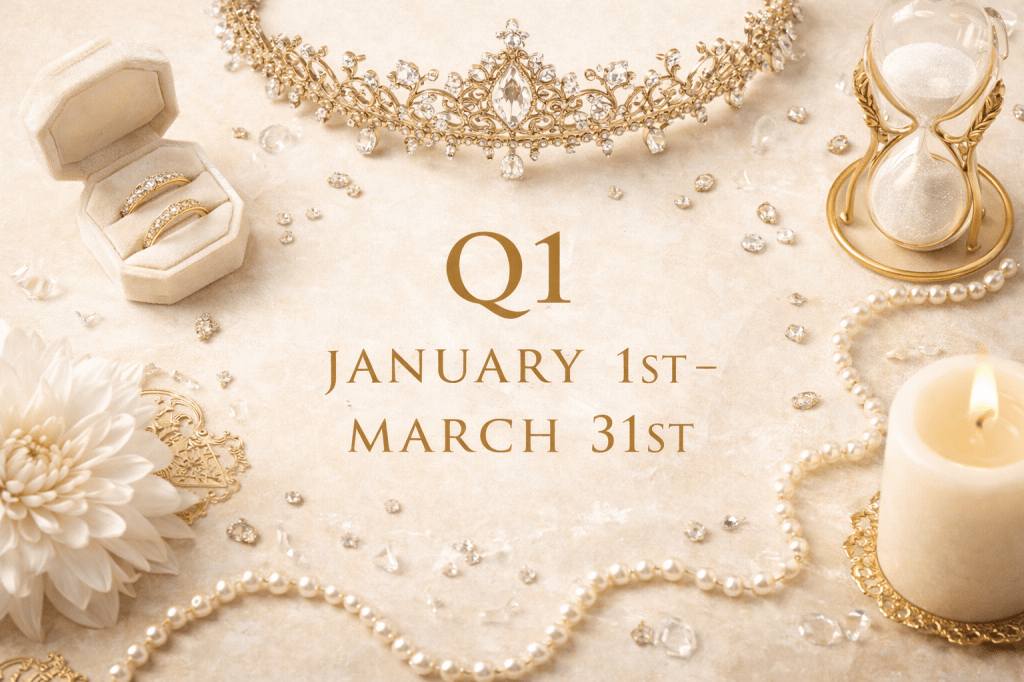
Q1 is not about rushing — it’s about alignment. January 1st through March 31st is the window to move with clarity, discipline, and intention. No noise, no proving – just focused action and quiet momentum. What we plant now will speak for itself later. 🌱

#QueendomEntertainment #Q1 #Business

Categories
Ebony Queen Queendom Entertainment

The Consort

It was his smile that struck me. I had been following him on social media for quite some time. His calm, grown, & sexy demeanor on his posts and in his stories was mesmerizing. He didn’t seem to have any red flags on his page, which should’ve been one to begin with, but naively… I fell. 

Knowing that we were both Scorpios created this insatiable tension within me. I knew that we could never truly be together but I was curious at how passionate a friendship between us could be. We were, by nature, both irresistibly magnetic, innately loyal, and passionately sexual. In my mind, this was the kinda connection I needed to revive myself from years of celibacy. A connection that wouldn’t end up being a long draining relationship full of drama and strain. 

I envisioned it modeling after a romance from years before where we never needed words to communicate with each other. We only ever let our bodies do the talking. He’d call for me or I’d call for him and we’d show up for the other every time. No games, no dates, no deep intellectual conversations… we’d just fuck each other tirelessly. We never complicated things by questioning if we were meant for more with each other. It was just pure, unfiltered, passionate fucking and deep down I wanted that again. 

The consort had that kind of mystery about him. He seemed like a man that could fuck me the way I needed it and keep it under wraps. So I pursued him. It started with a simple joke with sexual innuendo. It peaked his interest when I showed him that side of me because I was a real stranger to him. Something I should’ve foreseen being a problem in the future, given the state of the world & relationships today lacking authenticity. But he bit, and soon he’d find that my sweetness was genuine. I showered him with gifts, uplifted him with words of affirmation, and even flexed my femininity to him by performing submission rituals for him. A dangerous game I was playing, doing all that for a man that didn’t know me from a can of paint and wasn’t connected to me or my life in any real way. I was a mystery to him and although it intrigued him, it also is what drove him away in the end.

After a couple of missed opportunities, the night had finally come where our bodies would meet. It was a hot August night and the air was thick with tension and passion. I drove to him which offered a sense of protection for me and a sense of control for him. We both were nervous about what this would finally look like now that we were meeting in real life. I brought everything I could to take the edge off us both… liquor and smoke. We didn’t end up needing either though. 

In his kitchen, I stood still for moment… shy. I looked over at him, dick out and erect, nervous… wondering if I had gotten myself into something that I wasn’t ready for after years of being emotionally regulated by isolation. “Don’t act shy now” his voice thundered, cracking the silence that was consuming me internally. As a divine feminine, donning my beads and with full authority over my sexuality, I bent to his will. His command and sternness threw me into a tizzy. I couldn’t hold back sexually from him the way I had originally planned. I didn’t intend to open myself up to him as deeply as I did on night one but it was like cosmically, it was meant for him to bring that side of me back into the light.

Finish reading at:

https://open.substack.com/pub/scorpiana/p/the-consort?r=2b4j0u&utm_campaign=post&utm_medium=web&showWelcomeOnShare=true

https://scorpiana.substack.com